SBI Maxgain and Home Loan Overdraft: The Sweep Account Trick
SBI Maxgain, ICICI Home Overdraft, HDFC OD. Home loan overdraft products let idle cash cut your daily interest without locking the money away. Here is how they work, and when they beat a regular home loan.
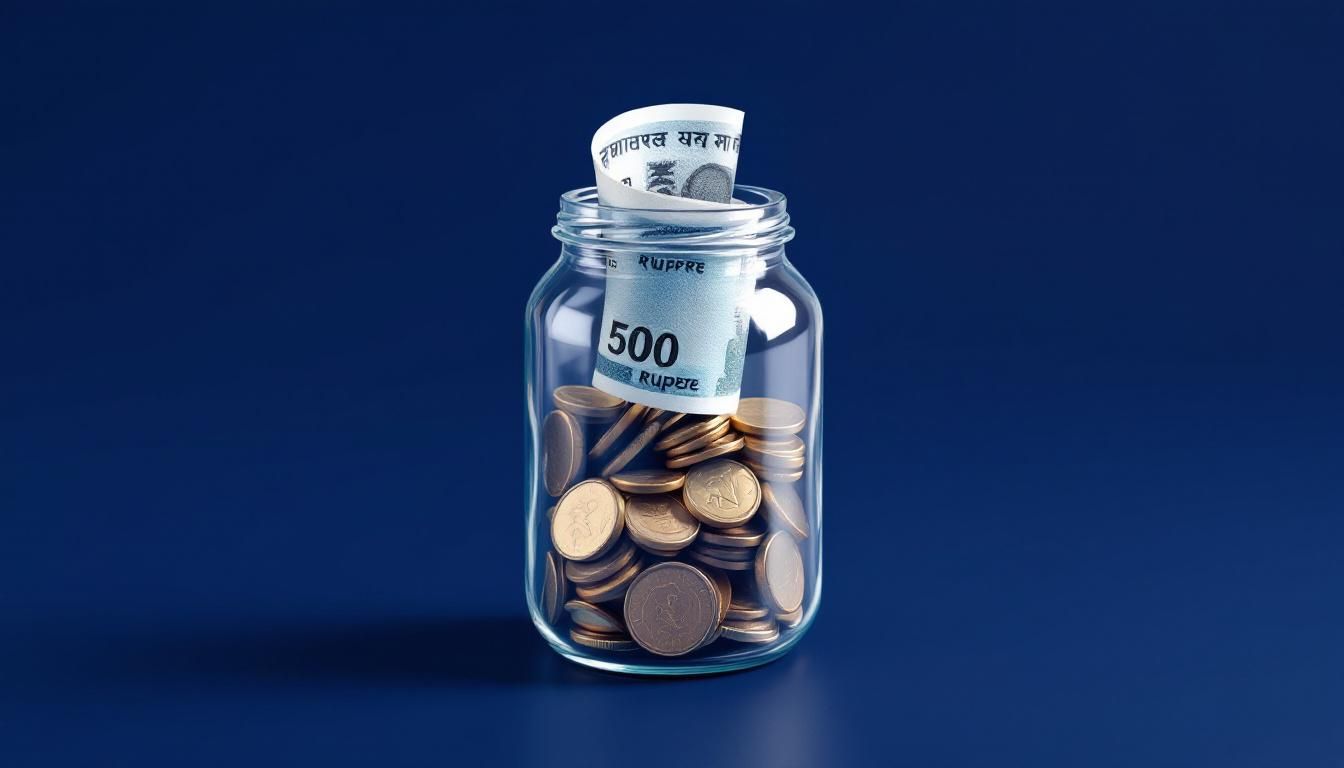
The product that exists because most borrowers cannot stick to a prepayment plan
Every personal finance column in India tells home loan borrowers the same thing. Pay an extra EMI every year. Prepay whenever you can. Reduce your tenure aggressively. The advice is correct in theory. Almost nobody does it. Life happens. A car breaks down. A wedding lands without warning. School fees jump 12%. The ₹50,000 you were going to prepay gets spent.
Home loan overdraft products exist to give you the interest-saving benefit of continuous prepayment without making you commit the money. The cash stays in your account, fully withdrawable. The bank calculates interest as if the money were a prepayment anyway. Park cash, save interest. Withdraw cash, interest goes back up. Nothing is locked.
This article explains how these products work, which banks offer them, and the two situations where they are the single best thing an Indian home loan borrower can do.
How a home loan overdraft works
A regular home loan has one account. You borrow ₹50 lakh. The bank charges interest on the outstanding every day. Your EMI services a bit of interest and a bit of principal each month. Money sitting in your savings account has no connection to the loan.
A home loan overdraft has two linked accounts.
- The home loan account. Your ₹50 lakh, amortising down as you pay EMIs.
- A linked current account. A zero-balance account attached to the loan.
When you deposit money into the linked account, the bank calculates daily interest on the loan using this formula:
Effective principal for today’s interest = Loan outstanding minus balance in linked OD account
If your outstanding is ₹50 lakh and there is ₹8 lakh sitting in the linked account, the bank charges interest on ₹42 lakh today. Tomorrow, if you withdraw ₹3 lakh for school fees, the bank charges interest on ₹45 lakh.
Your EMI does not change. The tenure does not change. But the portion of each EMI going to interest shrinks, and the portion going to principal grows. The loan closes earlier than the contracted tenure if you maintain a positive average balance.
The money in the linked account earns no interest. That is the whole point. What you get instead is an effective return equal to the home loan rate, tax-free. It is a reduction in a liability, not an increase in an asset. The tax department does not treat it as income.
What the math looks like
A representative comparison for a ₹50 lakh home loan with 20 years remaining at April 2026 rates. Regular home loan at 7.80% EBLR. SBI Maxgain-style OD at 8.00% EBLR. The 20 basis point premium is typical.
Scenario A. No idle cash ever
If you never park money in the linked account, the OD product is strictly worse. You pay 8.00% on the full outstanding every day, instead of 7.80% on the regular loan. On a ₹50 lakh, 20-year loan, the OD costs you about ₹1.3 lakh extra across the full tenure.
Verdict. If your cash flow is smooth and you keep no buffers beyond one month of EMI, take the regular home loan.
Scenario B. ₹5 lakh average idle balance across the year
Many salaried borrowers have a rolling cash buffer. Bonus money, tax refunds, an emergency fund, sitting in a savings account earning 3% to 4%. If you move that buffer into the linked OD account instead:
- Daily interest base drops by ₹5 lakh on average.
- Interest saving on the loan. 8.00% on ₹5 lakh. ₹40,000 per year.
- Rate premium on the rest of the outstanding. 0.20% on ₹45 lakh average. ₹9,000 per year extra.
- Net annual saving from using OD instead of regular: ~₹31,000.
Over 20 years, that compounds to roughly ₹6.2 lakh of lifetime saving compared with the regular loan. The ₹5 lakh never stops being yours. You can withdraw it on any business day.
Verdict. If you carry a ₹3 lakh or larger rolling buffer, OD wins.
Scenario C. ₹15 lakh bonus plus salary cashflow
This is where the OD product shines. Think of a consultant or a senior executive who gets a ₹15 lakh performance bonus in April that gets spent down over 12 months. Advance tax in July. A family holiday in September. School fees in April. Car insurance in June. Rolling into next year’s bonus.
- Daily interest base drops by an average of ₹8 lakh across the year.
- Interest saving. 8.00% on ₹8 lakh. ₹64,000 per year.
- Rate premium. 0.20% on ₹42 lakh average. ₹8,400 per year.
- Net annual saving: ~₹55,000.
Over 20 years, assuming similar bonus cycles continue, that is ₹11 lakh or more in lifetime savings. Plus the tax efficiency. Savings account interest is taxable at your slab rate. An OD interest saving is not.
Verdict. If your annual income has a meaningful bonus or lumpy component, OD is a no-brainer.
Which banks offer this
Every major Indian bank has a product equivalent to SBI Maxgain. The branding varies. The basic mechanic is the same.
| Bank | Product name | Typical rate premium | Notes |
|---|---|---|---|
| State Bank of India | SBI Maxgain | 15 to 25 basis points | Most established, available across all SBI home loan branches, predictable interest calculation |
| ICICI Bank | ICICI Home Overdraft | 20 to 30 basis points | Monthly interest calculation, strong digital tracking |
| HDFC Bank | HDFC Home Loan OD | 20 to 30 basis points | Available alongside the standard home loan product |
| Bank of Baroda | Baroda Home Loan Advantage | 15 to 25 basis points | Lower absolute rate from a PSU base |
| Standard Chartered India | Mortgage Power | 25 to 40 basis points | Premium product, targeted at HNI salaried |
| Axis Bank | Power Saver Home Loan | 20 to 35 basis points | Linked to a savings account rather than a current account |
| Kotak Mahindra Bank | Home Loan Overdraft | 30 to 40 basis points | Higher premium, competitive absolute rate for mid-ticket sizes |
A few HFCs offer OD-style products too. LIC Housing Finance and Bajaj Housing Finance have variants. The pricing and operational fluency is better on the bank side.
Who should take this product
Strong fit
- Bonus-heavy salaried professionals. Performance bonuses, variable pay, annual incentives that land in lumps 1 to 4 times a year.
- Consultants and freelancers with monthly invoicing and quarterly expense cycles. Park the GST-liable amount in the OD account until the filing date.
- Small business owners. Working capital cycles create ₹2 to ₹20 lakh of float that otherwise sits in a current account earning nothing.
- Anyone with an emergency fund of ₹3 lakh or more sitting in a savings account. Moving that buffer to an OD-linked loan gives you an effective 7.5% or higher tax-free return on the buffer.
- Upper-middle-income households saving for a specific future goal. A down payment on a second property. Tuition for a child’s foreign education. A planned sabbatical.
Weak fit
- Early-career salaried borrowers living close to their EMI. If your savings account will be near-zero most months, the 20 basis point rate premium is a dead weight cost.
- Borrowers with the discipline to prepay aggressively. If you prepay every ₹50,000 the day you receive it, a regular loan achieves the same outcome at a lower rate.
- Very small loans below ₹10 lakh. Absolute savings are too small to justify the operational overhead of a second linked account.
Three things your RM will not tell you
1. The tax angle changes how you compute returns
The interest saving on an OD product is not taxable income. It is a reduction in an expense. If you compare “OD interest saving” to “savings account interest at 4%”, you have to add back the tax you would have paid on the savings account interest.
For a borrower in the 30% slab, 4% savings account interest is effectively 2.8% post-tax. An OD interest saving of 8% is 8% flat. The real gap is 5.2%, not 4%. On a ₹5 lakh buffer that is ₹26,000 a year the RM will not mention.
2. Your principal schedule will look misleading on your statement
Each EMI services less interest when you have money in the linked account, so more of the EMI goes to principal. Your outstanding drops faster than the contracted amortisation schedule. This is good news. But your statement will often show both “scheduled outstanding” and “actual outstanding” as separate lines. The divergence can look alarming at first glance. It is the product working as designed.
3. You can convert a regular home loan into an OD variant
Most banks will let an existing regular home loan customer switch to the OD variant. The conversion fee is 0.10% to 0.25% of outstanding. For bonus-heavy borrowers who took a regular loan initially and now have significant idle cash, this is a meaningful lever. Ask your home loan RM for a “product conversion” quote.
When OD is the wrong optimisation
Not every rate problem is a product problem. If your current rate is 8.75% on a 2018 MCLR-linked loan and you are comparing:
- Moving to a new-customer regular home loan at 7.15%. Saving of 160 basis points.
- Moving to an OD product at 8.00% with a ₹3 lakh average balance. Effective saving of about 150 basis points.
The regular loan wins on pure rate, and the OD is the wrong optimisation. The rate gap matters more than the OD mechanic when the rate gap is over 100 basis points. Run a rate audit first to see where the bigger saving is.
OD is the right optimisation when the rate gap is already closed, or you are on a competitive new EBLR rate, and you want to extract extra savings from your cash flow pattern on top of that.
Frequently asked
Does the money in the linked OD account count toward Section 80C tax-saving?
No. Section 80C gives you a deduction on principal repaid, up to ₹1.5 lakh per year. Parking money in an OD account is not a repayment. It is a deposit against which interest is not calculated. You still get the Section 80C benefit on the EMI principal component, but not on the OD balance.
What happens if I withdraw all the money from the linked account?
Nothing bad. The interest calculation reverts to being based on the full loan outstanding on days when the linked balance is zero. Your EMI does not change. The loan does not default. OD is a feature, not an obligation.
Can I use the OD-linked account as my primary current account for salary credit, UPI payments, and bill payments?
Yes. Many borrowers do. SBI Maxgain is routinely used as a primary account. Every rupee credited reduces that day’s interest calculation. Every rupee debited increases it. The daily churn works out in your favour on average because most accounts carry positive balances most days.
Is the interest saving compounded?
Yes, by an indirect mechanism. Each EMI with an OD balance retires more principal than it would on a regular loan. The outstanding drops faster. Future interest calculations happen on an even smaller base. The compounding effect is modest in year 1 and meaningful by year 5.
What happens if I close the loan early while there is money in the linked account?
The bank adjusts the money in the linked account against the outstanding and refunds the rest to you. No penalty on floating-rate home loans to individuals under the RBI 2025 Directions. For the full rules, see home loan foreclosure charges in 2026.
Can I claim Section 24(b) interest deduction on an OD loan?
Yes. The interest charged on the loan, after the OD balance reduction, is your deductible interest under Section 24(b). Up to ₹2 lakh per year for a self-occupied property. The OD feature lowers the interest you are claiming, which is a feature rather than a bug.
This article describes the mechanics of a general product category. Individual bank products differ in rate, conversion fee, and interest calculation methodology. Confirm details with the specific lender before committing. Product pricing cited reflects April 2026 rate cards across large Indian banks.
Find out exactly how much you are overpaying.
60-second audit. Three fields. No calls from banks. You get the exact ₹/month you could save and a step-by-step plan for your loan.
See if an OD product fits your cashflow